
How One Irrigation Pump Is Helping Farmers in Rwanda Fight Hunger

See how one irrigation pump is helping farmers in Rwanda grow more food, increase income, and fight hunger with a simple, scalable solution.

Published on
read TIME
March 11, 2026
6 minutes
See how one irrigation pump is helping farmers in Rwanda grow more food, increase income, and fight hunger with a simple, scalable solution.
Contributors:
Becky Straw
Co-Founder + CEO
Serrah Galos
Photographer         
Like this story? Please share:

Yesterday, Michael and I spent nine hours driving across Rwanda. Within the first hour, we understood why it’s called the land of a thousand hills.

After a full day on those roads, that number feels conservative.

The rainy season came early this year, and everything is electric green. Hills stretch endlessly, covered in patchwork farms. The air smells of eucalyptus. Red dirt roads wind over streams, with bridges made from logs tethered side by side. Each crossing comes with held breaths and white knuckles.

By late afternoon, we arrived in Ruhango.

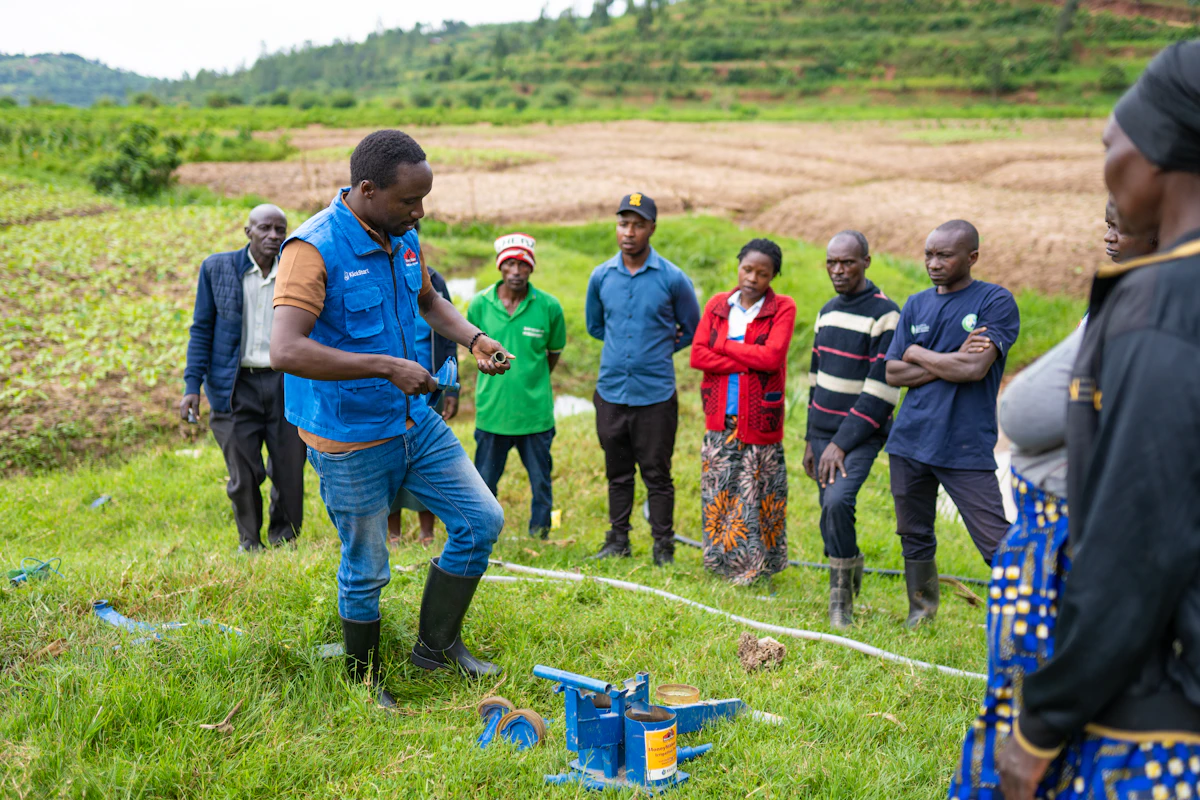
In the valley, about ten farming families gathered on a stretch of marshland. They stood together in a circle, focused on a single object placed at the center:

An irrigation pump.

How Irrigation Pumps Help Farmers in Rwanda Increase Food Production

Faustin, a field officer from KickStart International, demonstrated how the irrigation pump worked.

Farmers leaned in. They asked questions. They took turns trying it themselves.

Then, the first spray of water shot into the air.

It was met with laughter.

Moments like this are why so many of you believe in investing in people.

Over 60% of families in sub-Saharan Africa depend on small-scale farming for survival. Millions remain stuck in poverty and hunger. They depend on unreliable rainfall, have small plots of land, and lack access to modern tools and resources.

With irrigation, farmers are no longer dependent on unpredictable rainfall. Instead, they can water their crops consistently, growing more food throughout the year.

Why Smallholder Farmers Share Irrigation Pumps First

The Adventure Project has partnered with KickStart International for over a decade now. We admire their practical, market-based approach to reducing poverty.

But owning a pump is a big decision.

For farmers living in extreme poverty, every dollar matters. Every purchase is weighed carefully. That’s why KickStart knows people need to try it first, before they buy.

They introduce pumps through small farmer groups. Eight to ten farmers share one pump, rotating it from farm to farm. Each family gets to test it on their own land and see what happens.

This gives farmers a chance to see the results on their own land.

And once they do, things change quickly.

What Happens Next

With access to irrigation, farmers are no longer limited by the rain.

They can:

  • Grow during the dry season, adding an entire extra harvest each year.
  • Produce more food, more consistently.
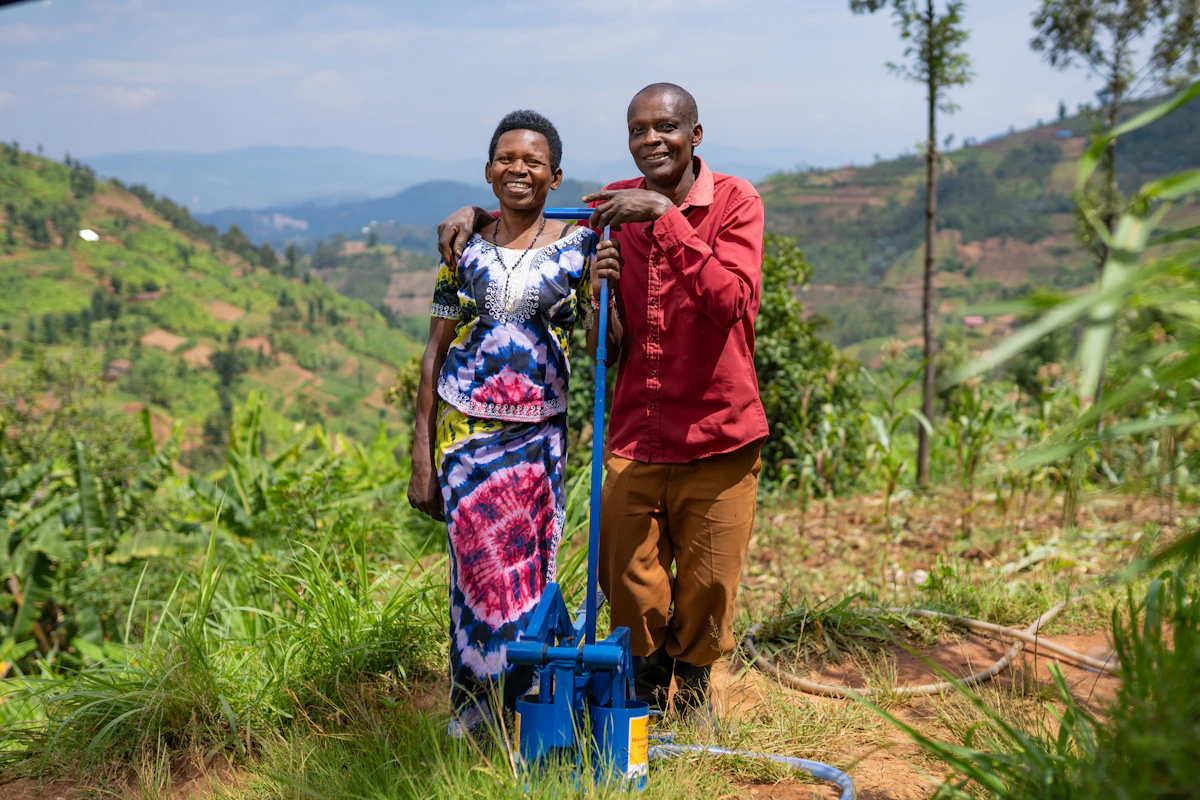
  • Feed their families and, on average, around 50 of their neighbors.

The shift is immediate. And it’s visible.

After seeing the results for themselves, farmers don’t need convincing.

They decide to invest in a pump of their own.

In Rwanda, nearly one-third of children under five face chronic malnutrition. This kind of increase in food production changes that.

A Simple Solution to Poverty That Works

Standing in that field in Ruhango, you could feel something shift.

One pump. Ten farmers leaning forward. The beginning of a different kind of season.

Development work can feel slow sometimes. One hill after another. But over time, those small moments begin to add up. Word spreads from farm to farm as more families see what’s possible.

This year alone, KickStart will reach 270 farmers in Rwanda through The Adventure Project’s support.

Why Irrigation Is a Scalable Solution to Global Hunger

Irrigation pumps are a proven, scalable solution to hunger and poverty. They can:

  • Empower farmers to invest in their own success
  • Create sustainable, long-term income
  • Increase local food supply
  • Spread organically through community adoption

This is not a temporary fix.

It’s a tool that farmers choose, use, and grow with.

Progress doesn’t always look dramatic.

Sometimes it looks like water hitting dry soil for the first time. Sometimes it sounds like laughter.

Sometimes, it starts with one irrigation pump.

If you believe in practical solutions to poverty, share this story with someone who would too.

Frequently Asked Questions

How do irrigation pumps help farmers in Africa?

Irrigation pumps allow farmers to water crops consistently, reducing dependence on rainfall. This leads to higher crop yields, additional harvests, and increased income.

Why don’t farmers just buy irrigation pumps themselves?

For farmers living in extreme poverty, the upfront cost is significant. Shared pump models allow them to test the investment first before purchasing their own.

How much impact can one irrigation pump have?

One pump can help each farmer to feed their family and up to 50 additional people by selling surplus in their local markets.

Is irrigation a long-term solution to hunger?

Yes. Irrigation boosts agricultural productivity by about 400%. This makes it a sustainable and scalable way to fight hunger.

How much does it cost to help one farmer?

It costs $247 to provide irrigation to one farmer in Kenya or Rwanda. To learn more and help, please visit: www.theadventureproject.org/hunger